
 In most Pinellas County homes, the heat has not run since spring. For months the system has had exactly one job, and it has been doing it around the clock.
Then some evening in November or December a front comes through, the air finally turns crisp, and somebody reaches for the thermostat and switches it to heat for the first time all year. A few minutes later the house smells like something is burning.
Usually that is harmless. Occasionally it is not. And with Thanksgiving on November 26, guests on the way and seasonal neighbors coming back to the area, the first half of November is the right time to find out which one you have, on a mild afternoon, while an HVAC company can still fit you in.
Here is what to check before the first cool night arrives.
Why Does The Heat Smell Like Burning The First Time You Turn It On?
Most of the time it is dust burning off the electric heat strips.
Many Clearwater homes heat with a heat pump, with electric heat strips in the air handler as backup, or with heat strips alone. Those strips sit unused most of the year and collect a light coat of dust. The first time they energize, the dust burns off, and you smell it throughout the house. That smell should fade quickly once the system has run for a while.
What is not normal:
- A smell that does not fade, or that returns every time the heat comes on.
- A hot-plastic or electrical odor rather than a dusty one.
- A breaker that trips when the heat kicks on.
- No warm air at all, or warm air at some registers and not others.
Any of those is a reason to turn the system off at the thermostat and call an HVAC contractor. The point of testing now is that you discover it on a pleasant weekday, not on the coldest night of the year with a house full of family.
What Should Heat Pump Maintenance In Clearwater Include Before The Cool Season?
A few homeowner checks, plus a professional service if the system has not had one this year.
What you can do yourself:
- Run the heat on a mild day. Switch to heat, raise the setpoint a few degrees, and confirm warm air at every register.
- Change the filter. It has been working hard since spring. A clogged filter makes the system run longer and work harder in either mode.
- Learn your thermostat’s “emergency heat” and “auxiliary heat” settings. Emergency heat runs the heat strips alone and is meant for when the heat pump itself is not working. It is an expensive way to heat a house. If your thermostat shows auxiliary heat running constantly on a mild day, that is worth mentioning to your HVAC contractor.
- Clear the outdoor unit. Trim back landscaping, pull out leaves and debris, and make sure nothing is stored against it. A heat pump needs open air around it in heating mode just as it does in cooling mode.
- Rinse the coil with fresh water. On the Pinellas peninsula, salt air is hard on outdoor coils and cabinets, and a gentle rinse on a regular schedule helps.
What belongs to a professional: refrigerant charge, electrical connections and components, the reversing valve that switches the system between cooling and heating, and the heat strips themselves. A seasonal service from a qualified HVAC contractor covers those.
 Are Your Smoke And Carbon Monoxide Alarms Ready For A Full House?
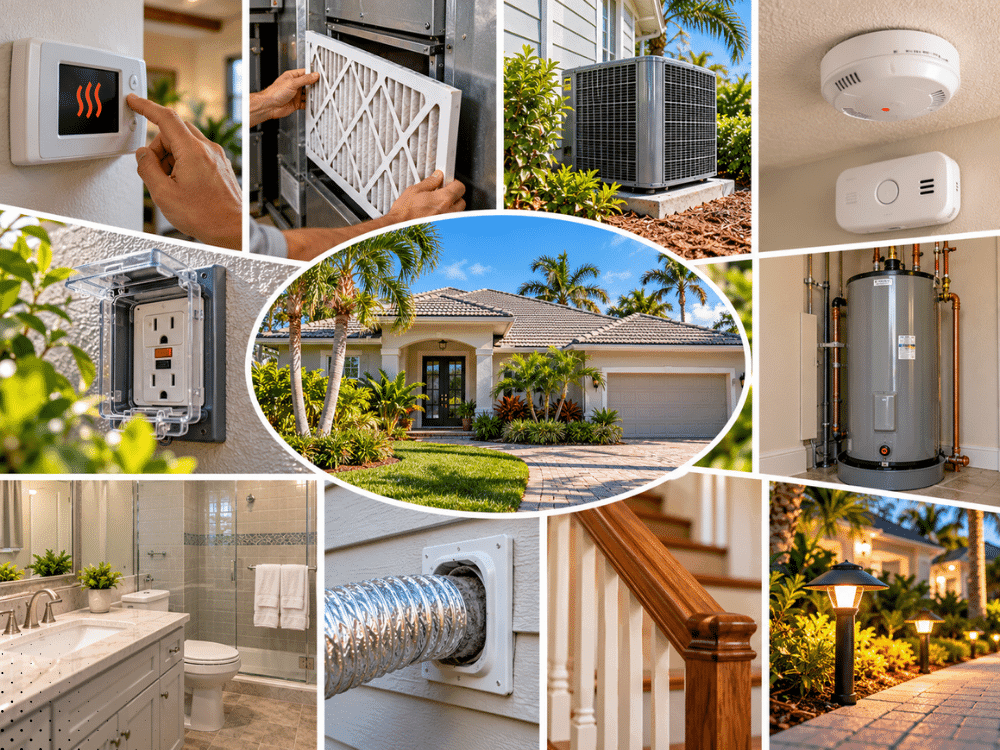 Are Your Smoke And Carbon Monoxide Alarms Ready For A Full House?
Test them now, because the busiest weeks of the year for most kitchens are coming.
Press the test button on every smoke alarm in the house. Replace batteries as the manufacturer directs, and check the date printed on the back of each alarm. Alarms do not last forever, and every unit carries a replacement date from its manufacturer.
Then think honestly about carbon monoxide. Many Clearwater homes are all-electric, and owners assume CO is somebody else’s problem. It may not be. Carbon monoxide can enter a home from:
- A car left running in an attached garage, even briefly.
- Gas appliances — a water heater, range, dryer or fireplace.
- A portable generator run too close to the house. After a storm season, plenty of Pinellas garages have one. It belongs outdoors, well away from doors, windows and vents, and never in the garage, even with the door open.
If any of those apply, install carbon monoxide alarms following the manufacturer’s placement instructions, and test them along with the smoke alarms.
What About Holiday Lights And Outdoor Outlets In Salt Air?
Test the outdoor GFCI outlets before anything gets plugged in.
Outdoor receptacles in Tampa Bay live a hard life: sun, salt air, sprinkler overspray and the occasional lawn mower. Before the lights go up:
- Press the test and reset buttons on each outdoor GFCI outlet. If it will not trip or will not reset, it needs replacing.
- Check the covers. Cracked or missing covers let water in. Outlets that stay plugged in for weeks should have an in-use (bubble) cover.
- Look for corrosion or scorching at the outlet face. That is an electrician’s call.
- Use lights and cords rated for outdoor use, and do not route cords through doors or windows where they get pinched.
- Turn off or redirect any sprinkler head that hits the outlet or the cords.
Is The House Ready For Guests And Returning Seasonal Neighbors?
A few quick checks now save an awkward conversation on Thanksgiving morning.
- Water heater. More people means more hot water. Look for rust or moisture at the base and make sure the relief valve discharge line is in place and runs where it should.
- Guest bathroom. Run every fixture that has not been used in a while, look under the sink for drips, and listen for a toilet that keeps running.
- Dryer vent. More guests means more laundry. Clean the lint trap and check that the exterior vent flap opens freely.
- Handrails, steps and exterior lighting. Visitors do not know your house in the dark. Loose rails and burned-out entry lights are easy fixes.
- Sliders and locks. Make sure doors latch and lock properly before you leave the house full of company.
If you own a seasonal home or rental that has been closed up since spring, give it a proper reopening: run water at every fixture, look under every sink, check for a musty smell at the air handler and returns, and let the system run to bring the humidity down before anyone moves in.