
Published date: October 1, 2026
Condo and townhome buyers in Pinellas County, FL often ask the same important question: if the homeowners association maintains the building, what is actually left for me to inspect?
The answer is more than many buyers expect.
A professional condo inspection in Pinellas County FL evaluates the parts of the property that belong to the individual owner, including accessible interior components and systems that may affect daily living, maintenance decisions, and ownership responsibilities.
However, attached housing is different from a traditional single-family home. The inspection scope depends on ownership boundaries established by the condominium declaration, association documents, and maintenance responsibilities.
For buyers considering a condo or townhome in Clearwater, St. Petersburg, Dunedin, Palm Harbor, Largo, Safety Harbor, or surrounding Pinellas County communities, understanding what a home inspection covers — and what requires separate documentation — is an important part of the purchase process.
October, as the market enters the quieter season and Florida’s dry season approaches, is a valuable time to understand what belongs to the homeowner, what belongs to the association, and which questions a Pinellas County home inspector can help answer.
What Does a Home Inspection Cover in a Condo or Townhome?
The unit and the systems that serve it.
A condo home inspection in Clearwater, FL focuses on the accessible areas inside your ownership boundary and the components you are typically responsible for maintaining.
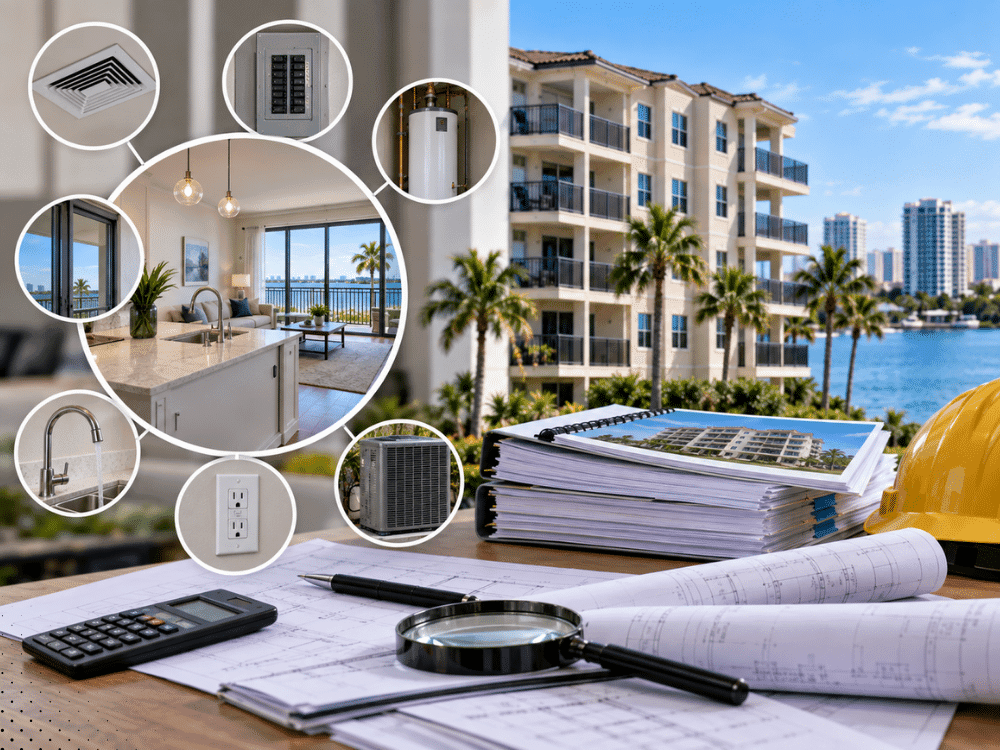
SEC Inspection Services evaluates accessible interior components, including:
- Interior finishes
- Electrical panels and receptacles serving the unit
- Plumbing fixtures and visible supply and drain lines
- Water heaters
- HVAC systems and condensate handling
- Windows and sliding glass doors
- Appliances
- Accessible balcony or patio surfaces and railings
For buyers researching what a condo inspection covers before closing, the goal is to understand the visible condition of the unit’s systems and components that directly affect ownership.
Townhome inspections may include additional areas depending on the ownership structure. In many communities, owners may have responsibility for components such as:
- The roof above their unit
- Exterior building components
- Attic areas
- Exterior envelope components
- Grading and drainage around their portion of the property
However, every community is different.
The inspection scope follows the ownership boundary, and the ownership boundary is determined by the association’s governing documents — not simply by what an inspector can visually see.
This is why one of the most valuable steps for a condo or townhome buyer is reviewing the declaration and association documents before the inspection. Understanding ownership responsibilities helps the inspector focus on the areas that apply to the buyer’s purchase.
For additional information about residential inspection services, buyers can review SEC Inspection Services’ home inspection services in Clearwater and Pinellas County
What Does a Home Inspection Not Cover?
The building’s structure and association-maintained systems are generally outside the scope of a standard unit inspection.
For many Florida condo buyers, this is where the most important questions begin.
A home inspector performing a unit inspection is not evaluating:
- The structural integrity of a multi-story condominium building
- The complete roof system of a large condominium complex
- Parking structures
- Seawalls
- Shared building components
- Community-wide balconies
These areas typically fall under association responsibility and, when required by Florida law, are evaluated through separate structural inspections performed by licensed engineers or architects.
Following changes to Florida condominium regulations after the Surfside collapse, certain condominium buildings are required to complete milestone structural inspections and structural integrity reserve studies.
These evaluations are performed by licensed professionals — not by a standard home inspector.
For buyers researching a Florida condo inspection checklist, these association records are separate documents that should be reviewed before purchase.
This is not a limitation of your home inspection. It is a separate evaluation process.
Before closing on a condo in Pinellas County, buyers should request and review:
- The association declaration and bylaws
- Milestone structural inspection reports when applicable
- Structural integrity reserve studies
- Current reserve balances
- Association budgets
- Recent meeting minutes
- Special assessment discussions or records
These documents provide information about the overall building condition and association responsibilities that a unit inspection cannot determine.
A well-maintained unit inside a building with significant association obligations, insufficient reserves, or upcoming assessments is something that only a review of association records can reveal.
For more guidance on preparing for a Florida property purchase, see our home inspection guide for buyers
What Do Inspectors Actually Find in Pinellas Condos and Townhomes?
A condo inspection in Pinellas County FL focuses on the accessible systems and components within the unit. While every property is different, inspectors frequently identify conditions related to HVAC systems, moisture management, plumbing, electrical components, and coastal exposure.
For buyers searching for a Clearwater condo inspection or townhome inspection in Pinellas County, understanding common findings can help set realistic expectations before closing.
HVAC and condensate handling
HVAC systems are among the most common significant findings during a Florida condo home inspection.
Many condominium units have air handlers located inside closets, utility spaces, or compact areas where proper drainage and maintenance are especially important.
Inspectors commonly evaluate:
- Air handler condition
- Accessible condensate drain lines
- Drain pans
- Signs of previous overflow conditions
- Equipment age and maintenance considerations
In attached housing, HVAC-related moisture conditions can affect more than one unit. A condensate overflow may impact neighboring units, making proper maintenance and documentation important for ownership responsibilities.
Water intrusion at windows, sliders and balconies
Pinellas County’s coastal environment exposes homes to high humidity, heavy rainfall, and wind-driven rain throughout the year.
During a condo or townhome inspection, inspectors evaluate accessible areas around:
- Windows
- Sliding glass doors
- Exterior penetrations
- Balcony surfaces
- Visible sealants and drainage areas
Common observations may include staining around window or slider openings, deteriorated perimeter sealant, or balcony drainage conditions that should be reviewed further.
Balcony responsibilities can vary significantly between the unit owner and the association. Because of this, documenting accessible conditions and reviewing association responsibilities is an important step for buyers.
For homeowners interested in seasonal maintenance information, see our guide on Florida home maintenance inspections
Plumbing material and age
Older Pinellas County buildings often contain plumbing systems installed decades ago.
During a condo inspection before closing, inspectors evaluate accessible plumbing components, including:
- Visible supply lines
- Drain connections
- Fixtures
- Water heater installation
- Water heater age
- Temperature and pressure relief valve discharge piping
In attached housing, plumbing concerns can involve shared walls, neighboring units, and building systems depending on the location and ownership structure.
Understanding the age and condition of accessible plumbing components helps buyers make more informed decisions about future maintenance.
Electrical
Electrical systems are another important part of a Florida condo inspection checklist.
Inspectors evaluate accessible electrical components such as:
- Electrical panels
- Breakers
- Receptacles
- Switches
- Ground-fault circuit interrupter (GFCI) protection where applicable
- Visible wiring conditions
Older properties throughout Pinellas County may have electrical components from previous construction periods that require additional review.
Certain panel types, installation methods, or outdated electrical components may also affect insurance considerations depending on the property and carrier requirements.
Salt-air corrosion
Coastal Pinellas County properties experience environmental conditions that can accelerate corrosion of exposed materials.
For condos near the Gulf Coast, inspectors may pay close attention to accessible components such as:
- Balcony railing attachments
- Exterior door hardware
- HVAC condenser components
- Exposed metal fixtures
- Exterior electrical equipment
Salt-air exposure is a normal coastal maintenance consideration, especially for properties located closer to beaches and waterfront areas.
Understanding these conditions helps buyers evaluate ongoing maintenance expectations after purchase.
Moisture and humidity in a closed-up unit
Seasonal properties and vacation units are common throughout Clearwater, St. Petersburg, Dunedin, and surrounding coastal communities.
A condo that remains vacant for extended periods may experience conditions related to Florida’s heat and humidity.
During an inspection, professionals may evaluate accessible areas for signs such as:
- Condensation around HVAC components
- Visible moisture staining
- Odors associated with enclosed spaces
- Conditions that may require additional evaluation
A unit that has remained closed during Florida’s summer months should receive careful attention before purchase.
This is one reason many buyers include a professional condo inspection in Pinellas County FL as part of their closing process.
What About Insurance Inspections?
Wind mitigation and four-point inspections are separate evaluations designed to answer insurance-related questions rather than provide a complete property condition assessment.
A standard home inspection and an insurance inspection serve different purposes.
A four-point inspection in Florida typically focuses on major systems such as:
- Roof
- Electrical
- Plumbing
- HVAC
A wind mitigation inspection evaluates specific wind-resistant construction features that may affect insurance considerations.
For condominium buyers, responsibility can become more complicated because certain components — such as roof coverings, roof-to-wall connections, and exterior building elements — may belong to the association rather than the individual owner.
Whether a buyer needs a wind mitigation inspection, four-point inspection, or another insurance-related report depends on the property, ownership structure, and insurance requirements.
Buyers should discuss these questions early with their real estate agent and insurance professional.
In Florida real estate transactions, understanding insurance requirements before closing can help avoid unexpected delays.
Why Is October a Good Time to Be Doing This?
October is an important month for Pinellas County condo buyers because hurricane season continues through November 30, and recent weather conditions may leave visible signs that are worth evaluating.
After months of tropical weather, wind-driven rain, and high humidity, inspectors may observe conditions involving:
- Window and slider areas
- Exterior sealants
- Balcony drainage
- Moisture-related conditions
- Accessible exterior components
These observations can provide useful information about the current condition of the unit before purchase.
October is also a practical time for buyers to review association records, including current budgets, meeting minutes, reserve information, and any discussions related to upcoming projects or assessments.
The National Hurricane Center publishes seasonal storm information that buyers may review when considering coastal property exposure.
The Florida Department of Business and Professional Regulation provides licensing information for Florida professionals, including home inspectors, allowing buyers to verify credentials before scheduling an inspection.
For buyers preparing to purchase property in the area, SEC Inspection Services provides home inspections throughout Clearwater and Pinellas County
What Pinellas Condo and Townhome Buyers Ask Most
Do I need a home inspection if the association maintains the building?
Yes.
A condominium association maintains many common elements, but individual owners are typically responsible for the systems and components inside their unit.
A condo inspection in Pinellas County FL helps evaluate accessible areas such as:
- HVAC systems
- Plumbing fixtures
- Electrical components
- Water heaters
- Windows and doors
- Appliances
- Interior conditions
Association maintenance does not replace the need for a unit inspection because ownership responsibilities are different between the individual unit and the shared property.
A professional home inspection for condo buyers in Florida provides additional information about the condition of the property before closing.
Does the inspection tell me if the building is structurally sound?
No.
A standard condo unit inspection does not determine the structural condition of the entire building.
Structural evaluations of condominium buildings, when required, are completed through separate inspections performed by licensed engineers or architects.
Buyers should request applicable association documents, including:
- Milestone inspection reports
- Structural integrity reserve studies
- Reserve funding information
- Association meeting records
- Special assessment information
These documents provide insight into building-wide responsibilities that are outside the scope of a unit inspection.
Understanding the difference between a condo inspection and structural building inspection in Florida helps buyers know what information they need before completing a purchase.
What association documents should I ask for?
Before purchasing a condo or townhome in Pinellas County, buyers should review important association records.
These may include:
- Declaration documents
- Bylaws
- Rules and regulations
- Milestone structural inspection reports when applicable
- Structural integrity reserve studies
- Current reserve balances
- Association budgets
- Recent meeting minutes
- Pending, approved, or discussed special assessments
These documents help buyers understand the financial and maintenance responsibilities associated with the community.
A home inspection evaluates the unit. Association documents help explain the condition and responsibilities of the larger property.
Both are important parts of the condo buying process.
Is a townhome inspection different from a condo inspection?
Usually, yes.
A townhome inspection in Pinellas County may include additional areas depending on the ownership structure.
Some townhome owners may be responsible for:
- The roof above their unit
- Exterior walls or portions of the exterior envelope
- Attic spaces
- Exterior drainage areas
- Other components defined in the governing documents
However, every community has different rules.
The association documents determine what belongs to the homeowner and what belongs to the association.
Reviewing those documents before the inspection allows the inspector and buyer to better understand the appropriate inspection scope.
What is the most common problem found in a Pinellas condo?
HVAC systems and condensate handling are among the most common concerns identified during condo inspections.
Florida’s warm and humid climate places significant demand on air conditioning systems throughout the year.
Inspectors often evaluate:
- HVAC equipment condition
- Drain lines
- Drain pans
- Accessible installation details
- Signs of moisture-related conditions
In attached housing, HVAC-related issues may affect neighboring units, making proper maintenance and awareness especially important.
The unit has been vacant or seasonal — does that matter?
Yes.
Many Pinellas County communities include seasonal residences, vacation properties, and units that may remain unoccupied for extended periods.
A vacant unit may experience conditions related to:
- Increased humidity
- HVAC operation settings
- Limited airflow
- Delayed discovery of leaks
- Moisture-related concerns
A careful inspection can help buyers better understand the condition of the unit before ownership changes.
This is especially relevant for buyers purchasing second homes, investment properties, or seasonal residences throughout Clearwater, St. Petersburg, and coastal Pinellas County.
What areas does SEC Inspection Services cover?
SEC Inspection Services provides home inspection services throughout Clearwater and Pinellas County, including:
- St. Petersburg
- Largo
- Dunedin
- Safety Harbor
- Palm Harbor
- Seminole
- Tarpon Springs
- Surrounding Tampa Bay communities
For buyers searching for a Pinellas County home inspector, SEC Inspection Services helps evaluate accessible residential components and provides detailed inspection reporting for buyers, homeowners, and real estate professionals.
Call to confirm availability for your property address and inspection needs.
The unit is yours to inspect. The building is the association’s to document.
Buying a condo or townhome in Pinellas County requires understanding both sides of the property: the condition of the individual unit and the responsibilities managed by the association.
A professional condo inspection in Clearwater FL helps buyers evaluate accessible systems and components inside their ownership boundary, while association documents provide information about shared building responsibilities.
Handling both steps gives buyers a clearer picture before closing.
Schedule your Pinellas County condo or townhome inspection with SEC Inspection Services — call (727) 359-0935 and begin requesting the association documents at the same time.
Buying a single-family home instead? Explore the full range of home inspection services available throughout Clearwater and Tampa Bay


