
 There is a particular kind of exhale that happens across Pinellas County in October. The tropical outlook is quiet. Nobody is refreshing a forecast or watching a cone crawl across the Gulf. The worst of it is behind us.
And that is precisely the moment most homeowners stop looking at their house.
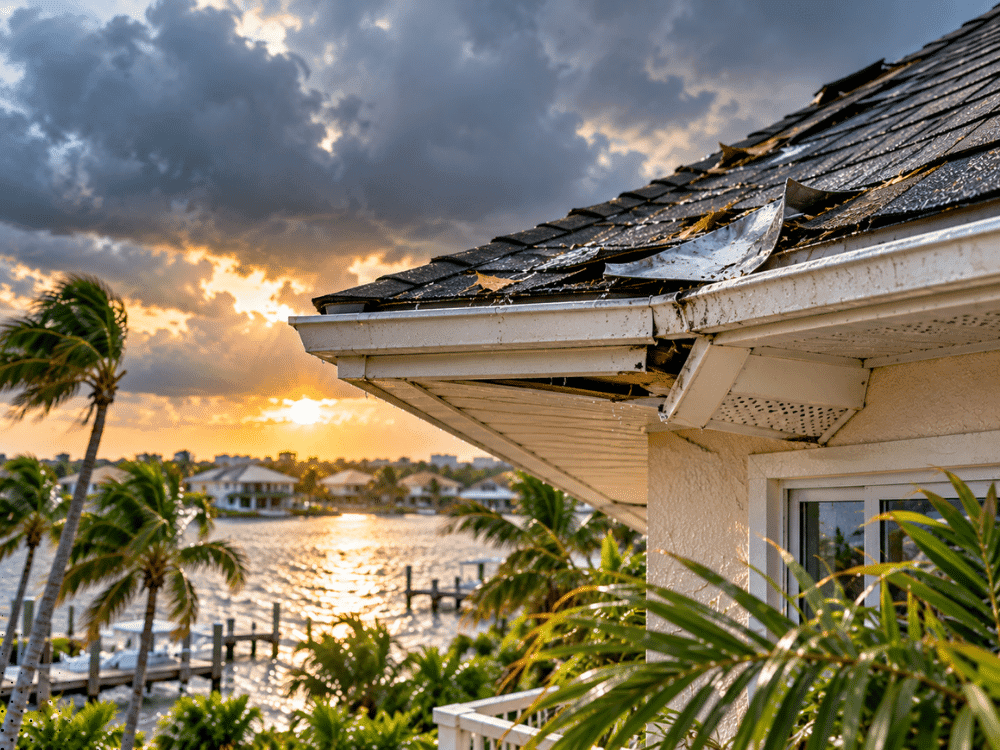
The thing is, a season does not need to produce a direct hit to leave marks. A stretch of onshore wind, a few afternoons of heavy horizontal rain, a tropical band that brushed the coast — that is enough to break the seal on shingle tabs, work a soffit panel out of its channel, drive water into a wall assembly, and start something in an attic that will not show itself for months. Nothing looks wrong the next morning. It simply becomes a larger repair between now and when you finally notice.
October is the right month to look. Season does not officially close until November 30, so there is still time to correct something. And the dry season that follows is the best working weather Tampa Bay gets all year — contractors have availability, and a repair can actually be done properly.
Here is what to walk.
What Storm Damage Do Pinellas Homeowners Usually Miss?
The kind that is invisible from the ground.
Nearly all wind damage on a Florida roof is found by looking down at the roof surface, not up at it from the driveway. A roof can appear completely intact while a row of shingle tabs has had the seal strip broken — the shingles are still there, still lying flat, but they are no longer bonded. The next sustained wind event takes them.
What to look for, or to have someone look for:
- Lifted or unsealed shingle tabs, particularly along ridges, hips and the windward edge.
- Soffit and fascia. Soffit panels are the classic Tampa Bay weak point. Wind pressure pushes them up out of the channel, and once one is loose, wind-driven rain has a direct path into the attic and the eave assembly.
- Flashing at every penetration. Vent boots, skylights, the AC curb, and every roof-to-wall transition. Cracked and hardened vent boot collars are among the most common findings in this county — UV and wind finish them off together.
- Tile roofs, if you have one. The tile is not the waterproofing; the underlayment beneath it is. Slipped or cracked tiles matter because of what they expose.
- Screen enclosures and pool cages. Check the anchors and base fasteners, not just the screen. A cage that racked slightly this season will fail properly in the next one.
- Inside, look at ceilings and the tops of exterior walls. Faint discoloration, a hairline crack that was not there in May, or a soft spot in a closet ceiling are the early tells.
Then get into the attic with a flashlight during daylight. Daylight where there should not be any, darkened or damp sheathing, matted insulation and rust streaking on nail shanks all indicate water has been getting in.
What Is Salt Air Doing To A Clearwater Home?
Corroding the metal you never think about — and a season of onshore wind accelerates all of it.
On the Pinellas peninsula, and especially on the beach side, corrosion is a maintenance category in its own right rather than an occasional problem.
- Structural connectors and fasteners. Hurricane straps and truss connectors in the attic, deck and railing hardware, and enclosure fasteners. Corroding structural hardware is a genuine finding, not a cosmetic one.
- The AC condenser. Coils and cabinets corrode noticeably faster near the water. Rinsing the outdoor unit with fresh water on a regular schedule genuinely extends its service life. While you are there, look at the pad, the line set insulation and the disconnect box.
- Outdoor electrical service equipment. The meter can, service mast and main disconnect all live outside in salt air. Rust staining or corrosion at the meter enclosure is an electrician’s call, not a wire-brush project.
- Garage door tracks, rollers, hinges and the opener. In a coastal home the garage door is both a corrosion target and, in a wind event, a structural one.
- Water heater and any exposed plumbing connections, where dissimilar metals and salt air combine badly.
None of this is exotic. It is the cost of living where we live, and it is far cheaper to manage on a schedule than to replace after failure.
 What Changes When The Dry Season Starts?
 What Changes When The Dry Season Starts?
Your water problems change character, and several of them finally become findable.
Through the wet season everything outside stays damp, which means drainage faults hide — the whole yard is wet, so nothing stands out. As Pinellas dries through late October and November, things surface:
- Grading and drainage become obvious. The low spot that holds water against the foundation, the downspout discharging at the wall, the mulch bed built up above the slab line — all visible once everything else dries.
- Irrigation becomes the primary moisture source. When the rain stops, a sprinkler head that has been hitting the stucco is now doing all the damage the rain used to do. Watch a full cycle and turn any head striking the wall, the soffit or the windows.
- Indoor humidity load drops. This is the right moment to judge whether your AC has actually been keeping up — look for condensation at registers, a musty odor at the return, and a condensate line that has been backing up.
- Outdoor work becomes possible again. Sealing, painting, pressure washing, roof repair and concrete work all cure properly now. Nobody wanted to do it in August, and now nobody has to.
Should A Seasonal Or Rental Property Get Checked?
This is worth calling out separately, because Pinellas has a lot of both.
A house that sat through hurricane season empty is the highest-risk case there is. A slow roof leak, a failed condensate drain, a dead dehumidifier and a developing moisture problem can all progress for months with nobody present to notice a smell or a stain. Owners typically discover it in January, when it has become a much larger project.
If you own a seasonal home, a rental, or a property you manage for someone else, October — as people begin returning — is the cheapest moment of the year to find out where you stand.
Is It Worth Having Someone Look Before Season Closes?
For many Pinellas County homeowners, yes — particularly if nobody has been on the roof or in the attic since spring.
A maintenance inspection is not a real estate transaction. Nothing is being negotiated and nothing is at stake except finding out what the house needs while there is still time and good weather to handle it. It covers the roof, attic and ventilation, structure, plumbing, electrical, the AC system, and the drainage around the foundation, and it produces a written record of what is fine, what to watch, and what to deal with before the dry season runs out.
Take the next step with confidence. Ready to schedule your inspection? Call (727) 359-0935 or visit https://secinspection.com/ today!